
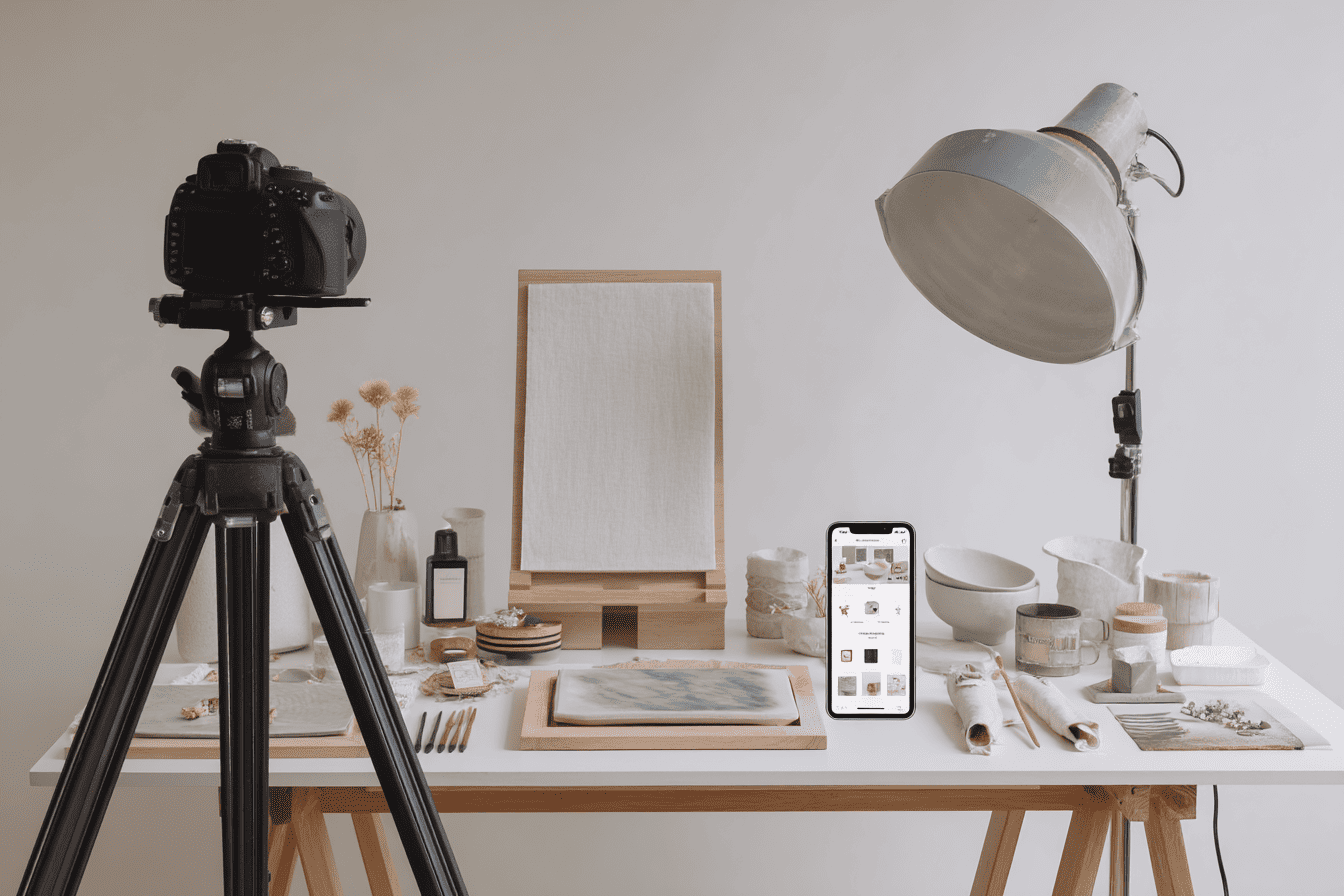
In the world of online selling, your product photos are your first impression—and your best chance to stand out. On platforms like ArtEXPO, where every product is unique and hand-crafted, quality photography doesn’t just showcase your art—it sells it.
Whether you're shooting epoxy resin art, robotics kits, ceramic mugs, or custom dolls, great product photography helps your creations shine and builds customer trust.
Let’s dive into the essentials of presenting your handmade work like a pro—even if you're working from your kitchen table.

📷 1. Lighting Is Everything
Forget filters—natural lighting is your best friend.
-
Shoot near a large window with soft, diffused light
-
Avoid harsh midday sun or strong shadows
-
Use a lightbox or softboxes for consistency indoors
If you’re using artificial lighting, keep the color temperature around 5000K (daylight) for accurate product tones.
🎨 2. Keep the Background Clean and Consistent
Use a neutral, uncluttered background to let your product take the spotlight.
-
White or light gray seamless paper is ideal for clarity and editing
-
Wooden textures work well for rustic or handmade aesthetics
-
Avoid busy patterns or colorful backdrops that steal attention
Make sure all product photos in your shop follow a similar style for a professional look.
🔁 3. Show Multiple Angles
Customers can’t touch your product—photos are their only way to explore it.
Include:
-
Front, back, and side views
-
Close-up detail shots (stitching, textures, engravings, finishes)
-
A scale shot next to a common item or with a ruler
-
A lifestyle photo (your product in use)
Bonus: a short GIF or video loop can boost engagement for kinetic art or tech kits!
👁️ 4. Focus on the Details
Use a tripod or phone stand and set your camera to focus on your product.
-
Use portrait mode or a macro lens for sharp detail
-
Keep ISO low (100–400) to avoid noise
-
Don’t zoom—get closer physically if needed
Capture the elements that make your product one-of-a-kind—like brushstrokes, carvings, joints, stitching, or sparkles in resin.

🧠 5. Style with Intent
Props should enhance—not distract from—your product.
Ideas:
-
Dried flowers for handmade jewelry
-
Artisan tools next to woodwork
-
Natural stone or linen under ceramic pieces
-
Minimal tech or code screens for robotics projects
Ask: “Does this prop support my product’s story?”

✂️ 6. Edit, Don’t Over-edit
Use editing apps like Lightroom, Snapseed, or Canva to enhance clarity, brightness, and crop alignment.
-
Maintain true-to-life colors
-
Don’t over-saturate or blur
-
Make sure the background is even and distraction-free
Always double-check how your images look on desktop and mobile—ArtEXPO is browsed on both!
📱 7. Use Consistent Dimensions
Crop your images to 3:2 or 4:5 aspect ratios and keep product framing consistent.
-
Center your product
-
Leave even space around the edges
-
Don’t zoom in too much—give your work room to breathe
Consistency helps your shop look like a curated gallery, not a scrapbook.
💼 8. Use the First Image Wisely
Your first image is the thumbnail—the one that shows in search and shop pages.
Make sure it’s:
-
Bright and sharp
-
Shows the product clearly
-
No props that distract
-
Represents the product in its best form
Save artistic shots or alternate views for the second or third image in the carousel.

🛍️ 9. Create Mockups or Scene Photos
Especially for prints, digital downloads, and wearable art, mockups can help buyers visualize the product in real life.
-
T-shirt hanging on a rack
-
Poster framed on a wall
-
Cup being held with coffee
-
Pillow on a couch or bed
Lifestyle imagery increases perceived value and drives clicks.

🧩 Final Thought:
In a marketplace filled with passionate creators and stunning pieces, presentation is what turns browsers into buyers. By treating your product photos like works of art themselves, you elevate your creations and tell a visual story that connects emotionally.
Remember, people don’t just buy products—they buy the way those products make them feel.
At ArtEXPO, your photos are the voice of your craft—make them speak volumes.